Frequently Asked Questions
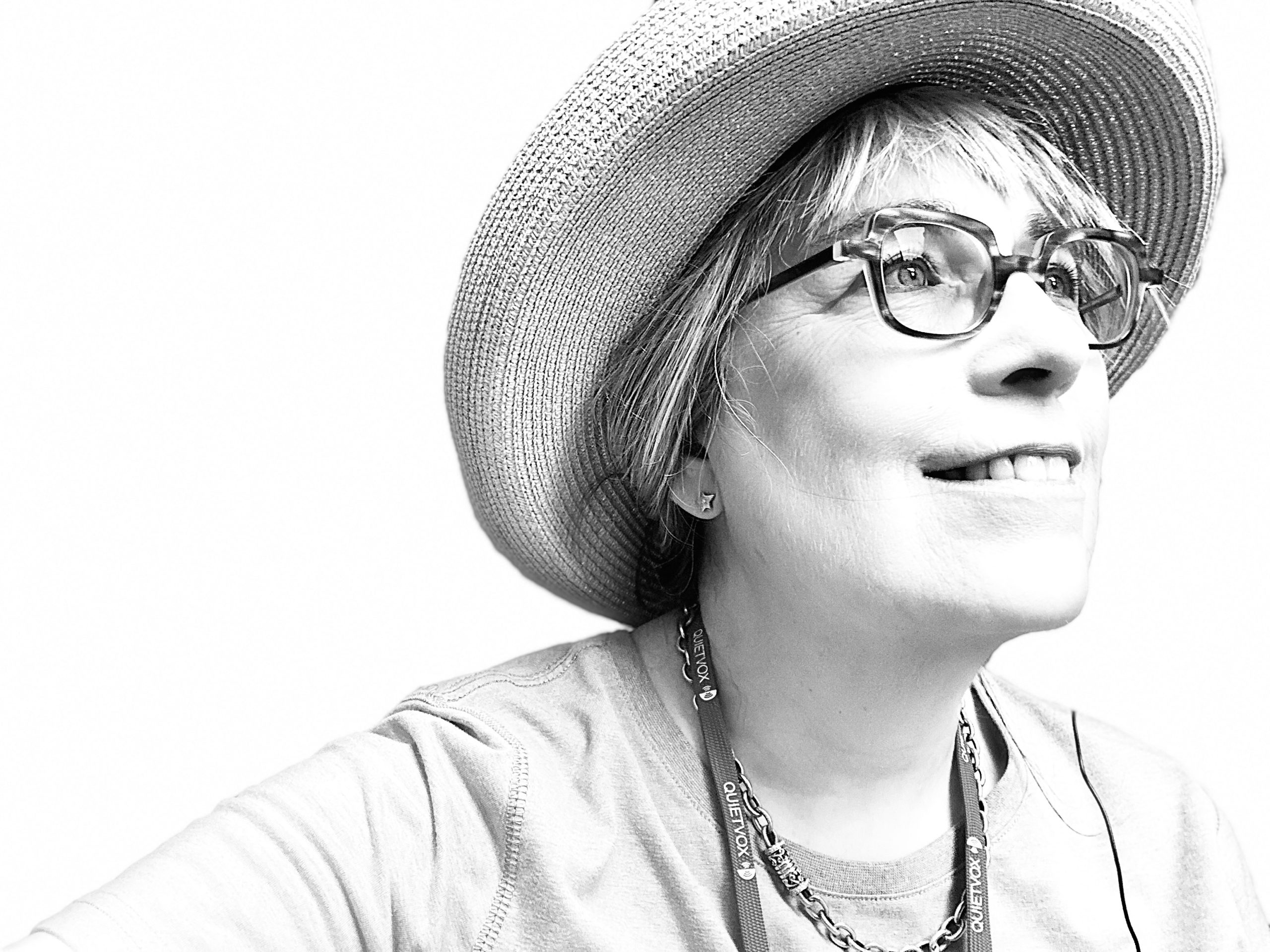
Information about Lori and her work.
When and where were you born?
January 12, 1955 in Long Beach, NY.
What is an art song?
Simply put, it is a poem set to music. In my art songs, I seek to capture the spirit of each poem and to amplify its emotional content through music.
How do you go about setting a poem to music?
I always compose the vocal line first. I have some idea of the harmonies that I want to use, but I do not flesh out the accompaniment until I feel that the vocal line is perfect. Then I seek to further illuminate the text by adding another layer of interpretation with the accompaniment.
How do you feel about transpositions?
I have no problem with transpositions that work musically. Generally, transposition of pieces for piano and voice is possible. Transposition becomes more difficult, if not impossible, when the accompaniment is not for piano. For example, in I Never Saw Another Butterfly, I use the entire range of the saxophone, so there's no leeway. The only solutions would be to either 1) use some occasional substitute notes in the voice part or 2) rewrite part of the saxophone part. I have written some alternate notes for a few singers, and would rather do this than alter the saxophone part. I have also made new arrangements of this particular piece for soprano with bassoon and soprano with clarinet. With my permission, some of the songs have also been performed with English Horn accompaniment. I am happy to answer any specific transposition questions.
How do you feel about having someone sing only one or two of the songs in a
cycle?
I don't mind at all. It is also fine to select songs from different cycles and combine them if it works for you.
How did your opera "Come to Me In Dreams" come about?
My opera "Come to Me In Dreams," is a compilation of 15 of my art songs woven together by David Bamberger, the Founder and, until recently, General Director of The Cleveland Opera. The new opera tells the tale of a Holocaust survivor and the premieres take place from June 9-13, 2004 at The Ohio Theatre in Cleveland, with baritone Sanford Sylvan in the lead.
Back in the fall of 2002, David had contacted me via email. To honor what would have been Anne Frank's 75th birthday, David was going to present "The Diary of Anne Frank" by Russian composer Grigori Frid. But he was searching for a companion piece. Quite by accident, David discovered my works online and emailed me. I wrote back, sent him my music, and thought perhaps David would present a few of my Holocaust cycles in concert. To my surprise, he had the brilliant idea to create a scenario from my works. (This was the easiest opera anyone has ever written! Conversely, it was the easiest libretto ever written!) This unintended juxtaposition of staged songs adds new meanings to the original poems and to the emotional content of the music.
How do you select your poetry?
I have to feel an emotional connection to the poem. Sometimes I will choose the poet and the poetry; sometimes a singer or a person commissioning the cycle will suggest a poet and leave the selection of particular poems up to me; and sometimes I am willing to set poems selected by others. However, I prefer to have some flexibility in choosing particular poems, to preserve the ability to create a dramatic or lyric sequence that speaks to me.
Regarding poets I have set recently: Adelaide Whitaker, who has commissioned several cycles, introduced me to the works of Mary Oliver, Anne Spencer Lindbergh and C.G.R. Shepard; my daughter Diana introduced me to the works of Thomas Lux; saxophonist Carolyn Bryan introduced me to Joyce Sutphen; I met Toi Derricotte and Paul Muldoon following their readings at The Folger Library; and I met Dana Gioia through a mutual friend. Sometimes the selection of poems has practical implications. For example, when I was composing Days and Nights, I did not want to worry about securing permission from any publisher, so I purposely chose poets whose works were in the public domain.
In 1995, Soprano Lauren Wagner suggested that I set some poems from the book I Never Saw Another Butterfly. All of the poems in this book were written by children who were killed the Holocaust. This was my introduction to Holocaust poetry, and I have continued to set poems with a Holocaust theme. Although my own life was not directly touched by the Holocaust, the subject matter of these poems touches me deeply. Each of the Holocaust poets that I have set has been directly involved with the Holocaust, and their poems allow us to identify with their experiences, making the horror of the Holocaust more real. Setting these poems to music allows this important poetry to be brought before a new audience.
Although I try to ensure that all of my settings capture the essence of the poem, it's nice to have actual feedback from a living poet. If I have questions about a poem, it's a treat to be able to email or contact the poet directly. Sometimes the poet will have a certain suggestion that can change the course of my composition. I love meeting new poets and exploring new poetry, and it's wonderful to have the opportunity to introduce their poems to a musical audience.
January 12, 1955 in Long Beach, NY.
What is an art song?
Simply put, it is a poem set to music. In my art songs, I seek to capture the spirit of each poem and to amplify its emotional content through music.
How do you go about setting a poem to music?
I always compose the vocal line first. I have some idea of the harmonies that I want to use, but I do not flesh out the accompaniment until I feel that the vocal line is perfect. Then I seek to further illuminate the text by adding another layer of interpretation with the accompaniment.
How do you feel about transpositions?
I have no problem with transpositions that work musically. Generally, transposition of pieces for piano and voice is possible. Transposition becomes more difficult, if not impossible, when the accompaniment is not for piano. For example, in I Never Saw Another Butterfly, I use the entire range of the saxophone, so there's no leeway. The only solutions would be to either 1) use some occasional substitute notes in the voice part or 2) rewrite part of the saxophone part. I have written some alternate notes for a few singers, and would rather do this than alter the saxophone part. I have also made new arrangements of this particular piece for soprano with bassoon and soprano with clarinet. With my permission, some of the songs have also been performed with English Horn accompaniment. I am happy to answer any specific transposition questions.
How do you feel about having someone sing only one or two of the songs in a
cycle?
I don't mind at all. It is also fine to select songs from different cycles and combine them if it works for you.
How did your opera "Come to Me In Dreams" come about?
My opera "Come to Me In Dreams," is a compilation of 15 of my art songs woven together by David Bamberger, the Founder and, until recently, General Director of The Cleveland Opera. The new opera tells the tale of a Holocaust survivor and the premieres take place from June 9-13, 2004 at The Ohio Theatre in Cleveland, with baritone Sanford Sylvan in the lead.
Back in the fall of 2002, David had contacted me via email. To honor what would have been Anne Frank's 75th birthday, David was going to present "The Diary of Anne Frank" by Russian composer Grigori Frid. But he was searching for a companion piece. Quite by accident, David discovered my works online and emailed me. I wrote back, sent him my music, and thought perhaps David would present a few of my Holocaust cycles in concert. To my surprise, he had the brilliant idea to create a scenario from my works. (This was the easiest opera anyone has ever written! Conversely, it was the easiest libretto ever written!) This unintended juxtaposition of staged songs adds new meanings to the original poems and to the emotional content of the music.
How do you select your poetry?
I have to feel an emotional connection to the poem. Sometimes I will choose the poet and the poetry; sometimes a singer or a person commissioning the cycle will suggest a poet and leave the selection of particular poems up to me; and sometimes I am willing to set poems selected by others. However, I prefer to have some flexibility in choosing particular poems, to preserve the ability to create a dramatic or lyric sequence that speaks to me.
Regarding poets I have set recently: Adelaide Whitaker, who has commissioned several cycles, introduced me to the works of Mary Oliver, Anne Spencer Lindbergh and C.G.R. Shepard; my daughter Diana introduced me to the works of Thomas Lux; saxophonist Carolyn Bryan introduced me to Joyce Sutphen; I met Toi Derricotte and Paul Muldoon following their readings at The Folger Library; and I met Dana Gioia through a mutual friend. Sometimes the selection of poems has practical implications. For example, when I was composing Days and Nights, I did not want to worry about securing permission from any publisher, so I purposely chose poets whose works were in the public domain.
In 1995, Soprano Lauren Wagner suggested that I set some poems from the book I Never Saw Another Butterfly. All of the poems in this book were written by children who were killed the Holocaust. This was my introduction to Holocaust poetry, and I have continued to set poems with a Holocaust theme. Although my own life was not directly touched by the Holocaust, the subject matter of these poems touches me deeply. Each of the Holocaust poets that I have set has been directly involved with the Holocaust, and their poems allow us to identify with their experiences, making the horror of the Holocaust more real. Setting these poems to music allows this important poetry to be brought before a new audience.
Although I try to ensure that all of my settings capture the essence of the poem, it's nice to have actual feedback from a living poet. If I have questions about a poem, it's a treat to be able to email or contact the poet directly. Sometimes the poet will have a certain suggestion that can change the course of my composition. I love meeting new poets and exploring new poetry, and it's wonderful to have the opportunity to introduce their poems to a musical audience.